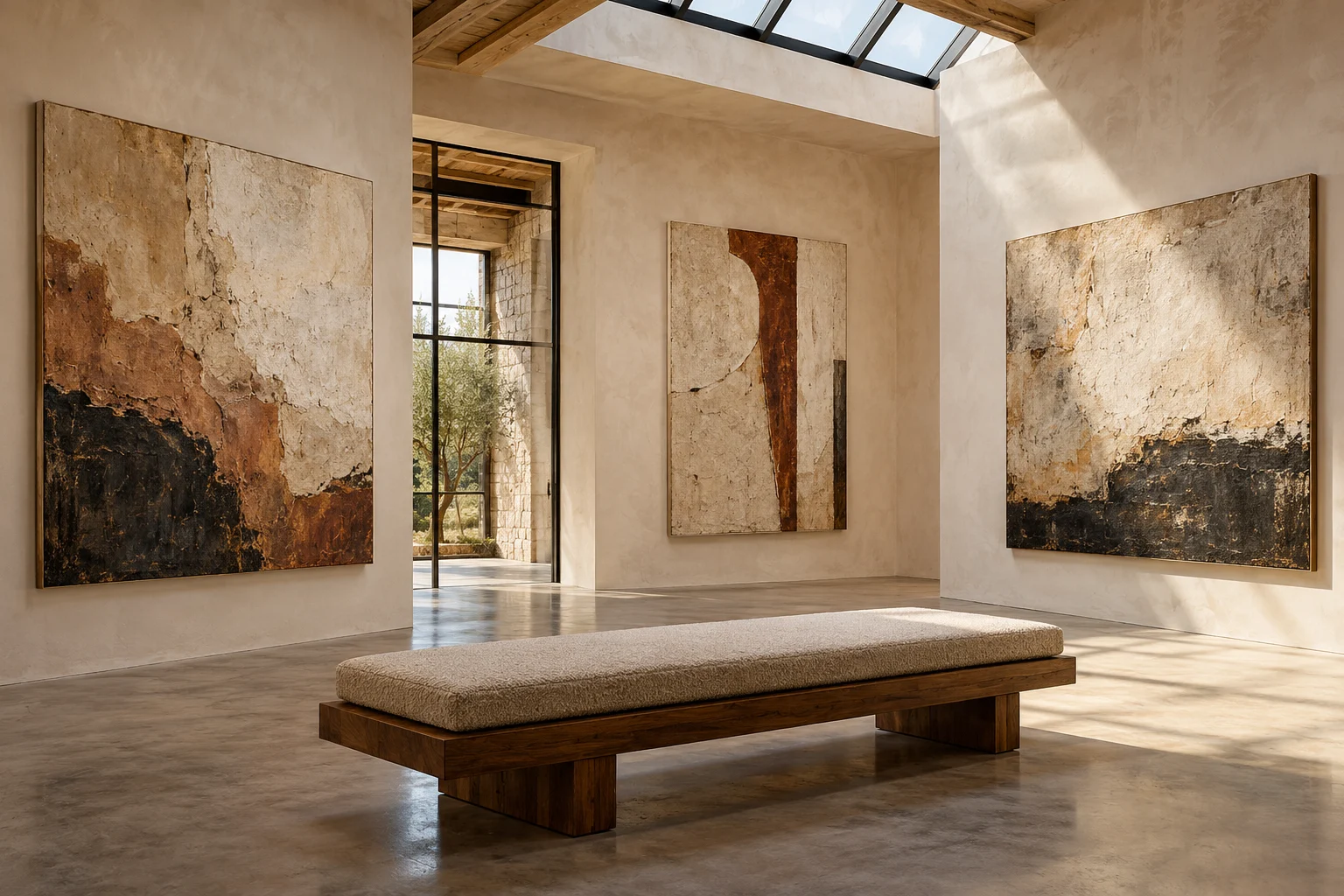
A sudden splash of crimson against a charcoal background catches the eye from across the room. Nearby, a sculpture of twisted metal seems to vibrate under the gallery lights, casting long, jagged shadows on the polished floor. These are the immediate, visceral reactions that happen before a single word of commentary is exchanged. You feel a sense of unease, or perhaps a sudden, inexplicable calm, simply by standing in the presence of a new shape or color.
The Gap Between Feeling and Fact
In many North Texas galleries, a small card sits beside each piece, offering a written explanation of the artist's intent. It might describe a period of isolation, a study of light, or a specific political movement. There is a subtle tension that arises when your personal response—that initial spark of curiosity or even boredom—clashes with the creator's stated explanation. You might see a landscape that feels lonely, while the placard describes a scene of abundance.
This friction is not a mistake on your part. It is the space where art actually lives. The value of the experience lies in the distance between what the artist intended and what the viewer perceives. One person may find a painting of a blue circle meditative, while another finds it cold and clinical. Both perspectives exist simultaneously within the gallery walls.
The Art of the Hand-Off
Sometimes, the challenge of an art outing is not about the art itself, but about the social logistics of sharing the experience. Imagine you are attending a local opening with a partner who has a vastly different relationship with visual culture. You find yourself deeply moved by a series of abstract textures, but your companion is scanning the room for the refreshments or looking for a way to exit the conversation. You want to share the moment without making them feel pressured to perform an intellectual critique they aren't interested in.
The tradeoff here is between deep, individual immersion and shared social engagement. You can choose to linger in a solitary moment of reflection, or you can attempt to bridge the gap. For example, if you see a piece that strikes you, instead of asking, "What do you think this means?", try asking, "Does this color remind you of anything?" or "How does the scale of this feel to you?" This shifts the focus from a search for a 'correct' interpretation to a simple observation of sensation.
Observing Without Judgment
When the conversation does begin, the goal is to maintain the curiosity you felt when you first walked in. You might find yourself wondering how the artist achieved a certain effect or why a specific material was chosen. If you find a particular technique particularly striking, you might ask the gallery attendant how the piece was constructed or what kind of lighting is best suited for its display.
Ultimately, an afternoon spent among canvases and sculptures is successful if you leave with more questions than answers. Rather than searching for a definitive meaning, focus on the specific details that provoked a reaction. Whether you are navigating a solo walk through a quiet studio or managing a social outing with a skeptic, the most honest way to engage is to trust your own eyes first.